
Heat Wave

Just a week ago, it was still definitely winter in the Maine Woods. After four and a half weeks at my cabin, it was time for a trip to the town of Greenville to pick up supplies and mail, do various errands, and attend a memorial gathering for a dear friend’s father. Gear sled in tow, I trekked across the frozen surface of the lake to a boat launch two and a third miles distant, then walked another mile and a half along a gravel road to retrieve my car.
During my stay in town, a record-setting heat wave prematurely melted much of our snow. According to the National Weather Service, the city of Bangor, Maine, about 64 miles south of my cabin, set or tied high-temperature records on three consecutive days.
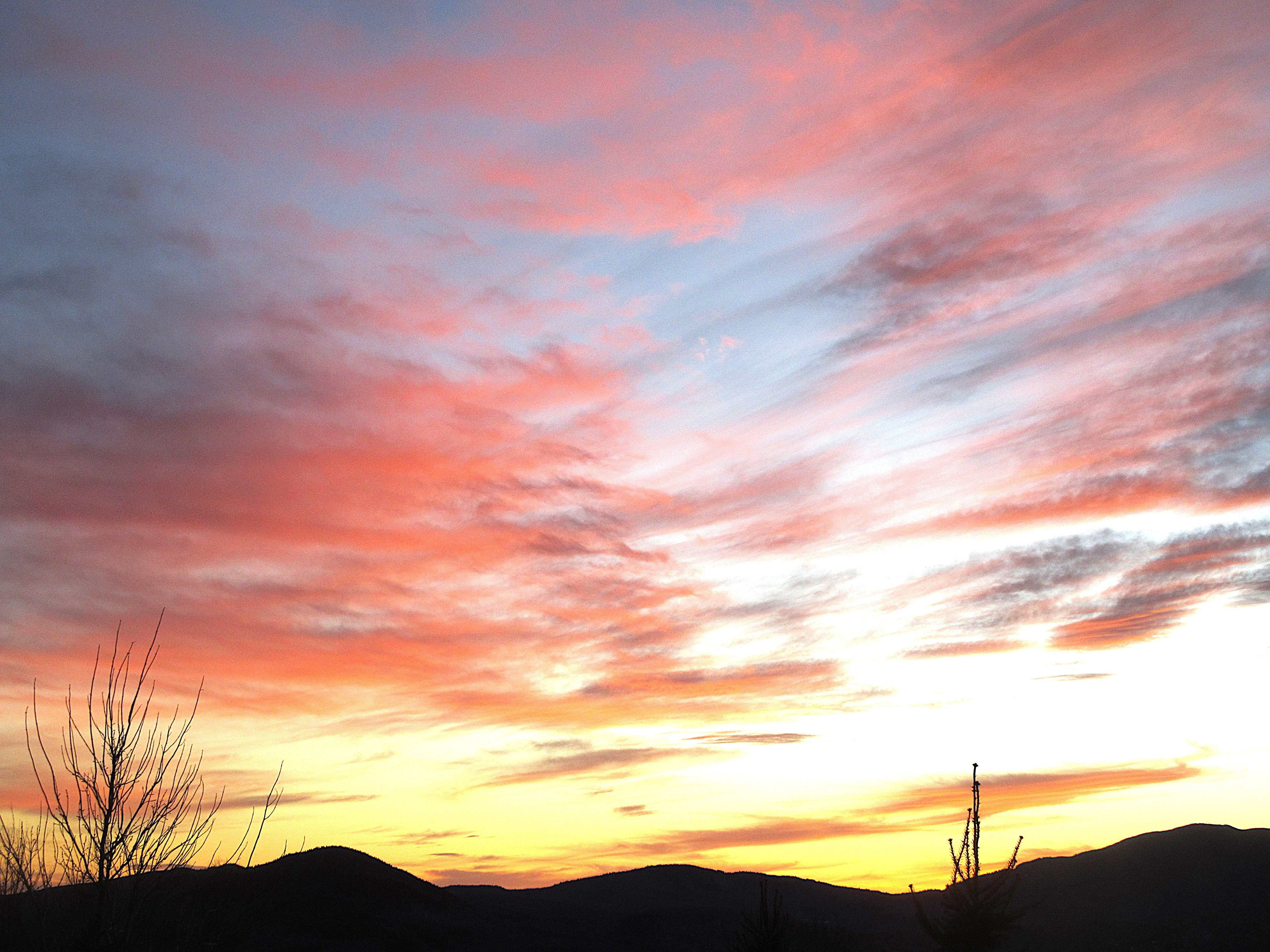
Along with the unseasonable temperatures, the weather produced a flamboyant sunset, which I captured from a hill above town.
Three days ago, I returned to my cabin on a sunny afternoon that reached the mid-sixties Fahrenheit. A typical high temperature for this time of year would be in the mid-thirties.
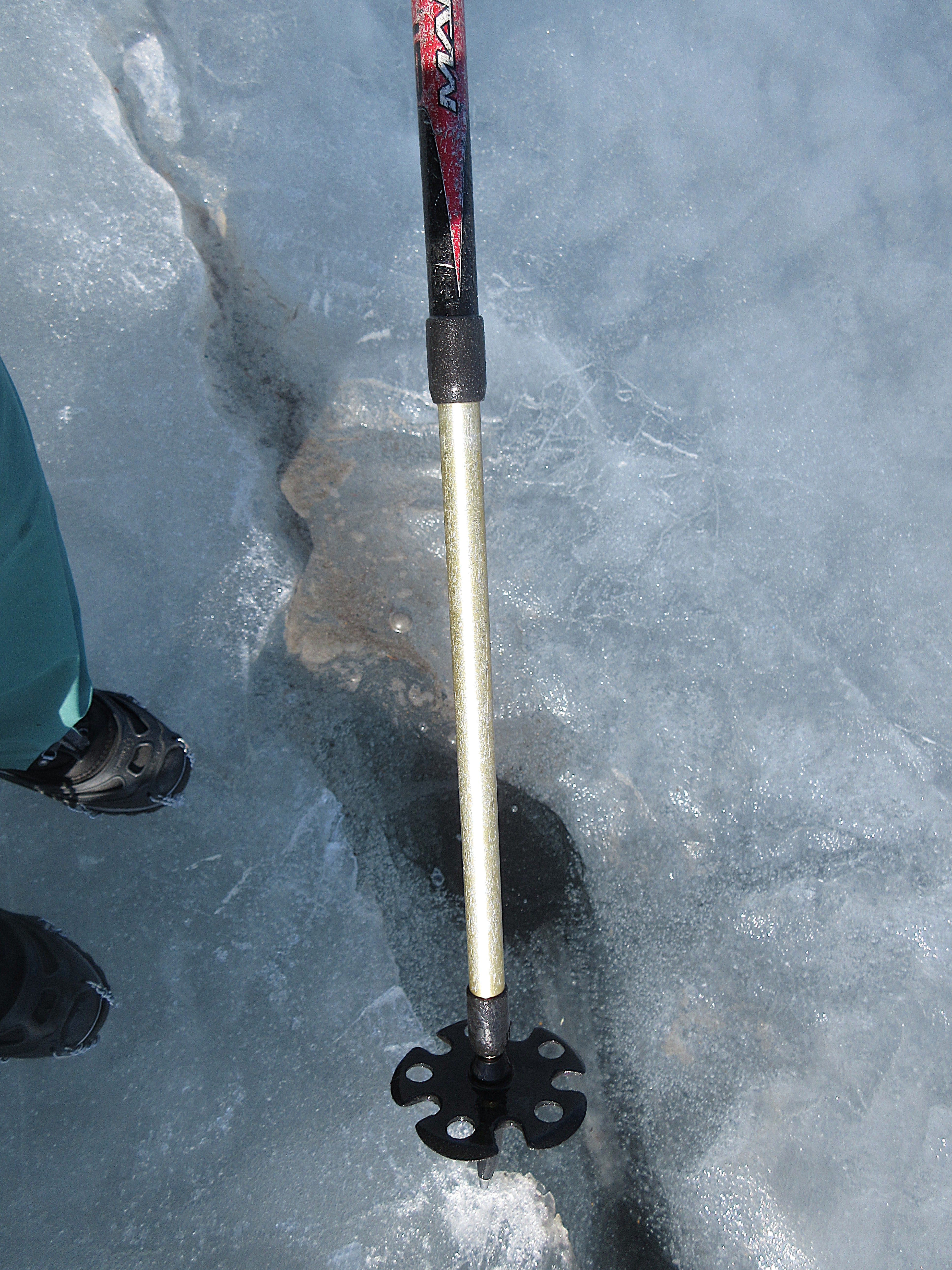
For the most part, the ice on the lake remained thick. It measured more than 20 inches where I checked it by sticking my trekking pole through a pressure crack. But the ice was covered with a layer of water, and drain holes had opened where the surface water flowed downward into the depths of the lake. I proceeded with caution. I wore a pair of spikes, secured by a cord around my neck, that would allow me to pull myself out if I broke through.
At the end of each winter, there is a period of a few weeks when the ice is no longer stable for me to cross – and, at the same time, roads and trails are a mix of mud and slush, good neither for driving nor walking. I need to be sure that, before “mud season” starts, I bring in enough supplies to see me through. I don’t know exactly how long the season will last, but I must be prepared to hunker down for the duration.
To my surprise, I’ve discovered that I enjoy this period of total isolation. The woods around my cabin feel like an enchanted realm in a fairy tale. Separated from the rest of the world by nearly impenetrable barriers, I have my domain all to myself.
During my previous two winters here, in 2021 and 2022, mud season started in late March or early April. This year, all bets are off. Over the past couple of days, wintry weather has returned, and we’re expecting more snow. But I can no longer trust the ice. The drain holes that opened during the heat wave will freeze thinly and the snow will hide them, creating treacherous spots that I will not be able to see.
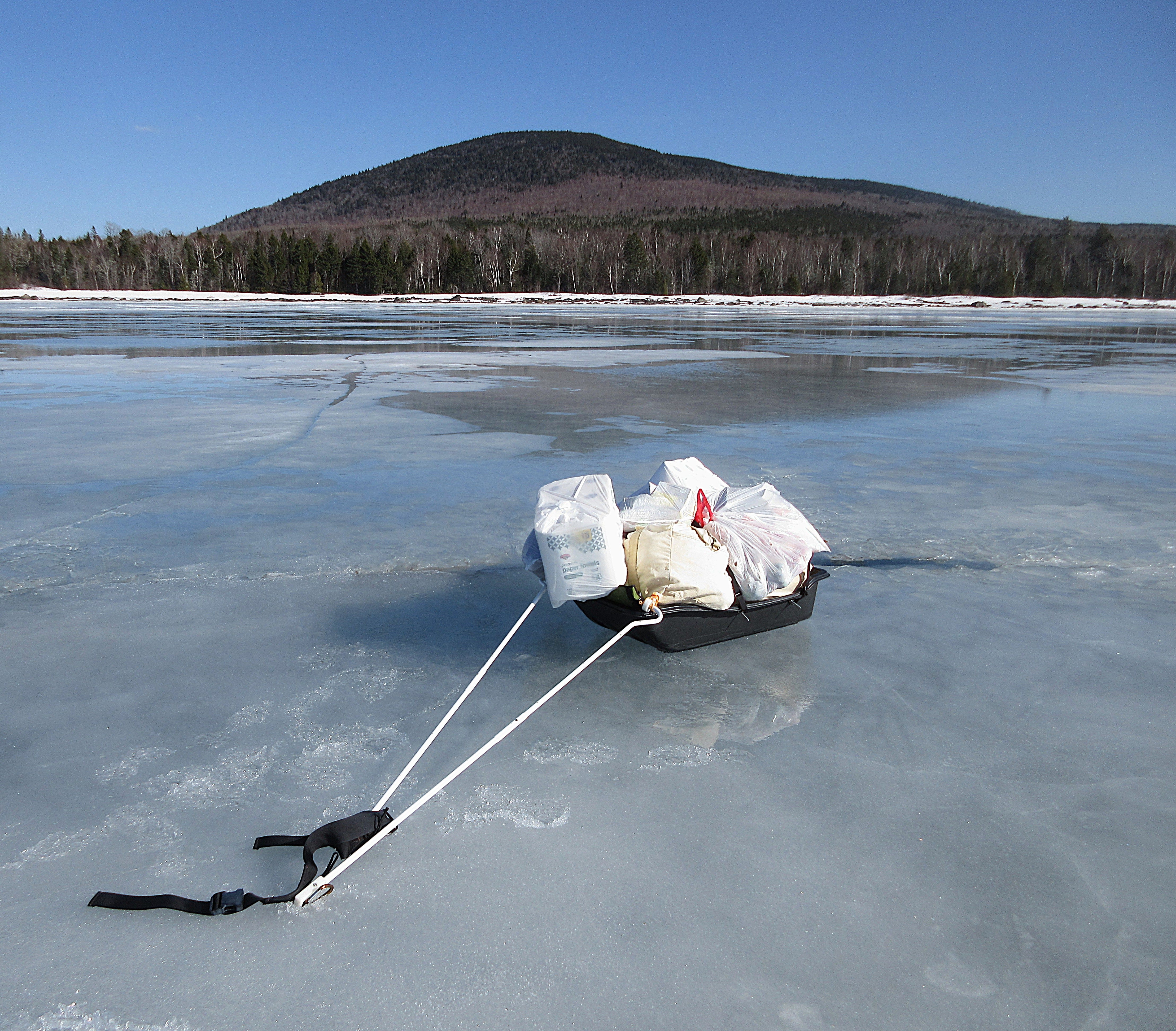
Realizing that this year’s period of isolation could begin early, I purchased extra supplies while I was in town. I had never tried to get so much onto my sled before, but by tying all my bags into one big interconnected mass, I made it work. The load must have weighed at least 125 pounds. Pulling it across the ice was slow, but not as slow as I feared it would be. With almost all the snow gone, there was little friction.
The hard part was getting my sled and supplies onto and off the ice on the lake. The shore was down to bare rocks or very slushy snow, not good for pulling a loaded sled. I usually take my sled out of my car on the road that runs by the boat launch, load my supplies right there, then pull the sled over the snow between the road and the lake. At the other end, I pull the sled up onto my snow-covered shore and continue right on up to my cabin. This time, I had to carry bags of supplies in my arms, on my shoulders, or on my back, making multiple trips from road to ice at the start and from ice to cabin at the end.
My love of winter was a major reason for my move to the Maine Woods. I grieve to see how winters have attenuated over the twenty-two years I’ve lived here.
Our forests and wildlife need the cold. Our warmer falls and earlier springs are harming moose by increasing the numbers of winter ticks that kill calves by consuming their blood. And if winters continue to warm – as they likely will – we will lose our hemlocks to the wooly adelgid, an invasive aphid-like insect that feeds on hemlock sap. So far, the extreme cold we typically experience in late January has kept the adelgid at bay. A hundred years from now, the Maine Woods will be different from what we know today.
Yet I can find joy and peace in these woods, here and now. May their still-vibrant life inspire me to be a good steward, working toward a hopeful future for this land that I love.
Thank you for updating us, Wendy! I'm happy you are well and appreciating the winter time. We continue to have a milder winter her in north central Idaho. We pray there'll be enough moisture for the crops.