
Everyday Miracles

In late July, I participated in the twentieth annual Thoreau-Wabanaki Trail Festival. I’ve attended this Festival every year since it started in 2007. The Festival celebrates the rich natural history of the Maine Woods; indigenous Wabanaki culture; Henry David Thoreau’s three journeys through this region; and the ways in which Thoreau’s relationship with his Wabanaki guides influenced his life’s work. It’s fitting that the Festival is based in Greenville, at the southern tip of Moosehead Lake. This was the launching point for Thoreau’s canoe expeditions in 1853 and 1857.
Moosehead Lake lies within the traditional homeland of the Penobscot Nation, part of the Wabanaki Confederacy. Wabanaki means “people of the dawn,” referring to their location near the eastern edge of our continent. The ancestors of today’s Wabanaki arrived in this region over 12,000 years ago, at the end of the last Ice Age. They discovered treeless tundra exposed by retreating glaciers. Even now, Wabanaki stories, passed down orally through the millennia, preserve memories of a time when mammoths roamed the land.
Descendants of those first people adapted to new lifeways as forests grew and spread. Their culture evolved in concert with the land, and, over thousands of years, their identity was shaped by interaction with its woods and waters.
Over the course of three days, Festival attendees learn from Penobscot elders and cultural teachers; Thoreau scholars; and experts in the plant and animal life of the Maine Woods. A fortunate few continue on to a three-day Penobscot cultural immersion experience on Sugar Island in the Penobscot River. I was able to join the cultural trip in 2024 and hope I will have the privilege of doing so again in the future – but this year, my work at the Appalachian Trail Conservancy Visitor Center in Monson took priority.
I was delighted when Festival Board President Suzanne AuClair asked me to begin this year’s Festival by leading a mindful walk. Mindfulness is more than just a pop psychology term. It’s an ancient Buddhist concept. In a natural setting, when we practice mindfulness, the aim is to immerse ourselves in the present moment, to concentrate on what we are seeing and hearing and smelling and feeling, to be fully awake and present to what we are experiencing, here and now.
Though Thoreau never used the term, he was a master of mindfulness. His attention to the sensory details of the natural world around him was all-encompassing. To him, it was a path to direct experience of the divinity that he understood to be nature’s essence. On a winter day, contemplating snowflakes, he wrote in his journal: “How full of the creative genius is the air in which these are generated! I should hardly admire more if real stars fell and lodged on my coat. Nature is full of genius, full of the divinity; so that not a snowflake escapes its fashioning hand.”
On the morning of my walk, rain was threatening. So I decided to keep my group of mindful walkers close to the Festival headquarters at the Greenville Junction Depot. We headed to the Red Cross Beach, right in town, where there is a small park offering trails that wind through a pocket of woods to Moosehead’s shore. We spent about an hour and a half exploring, with pauses for discussion and meditation. Along the way, I talked about “everyday miracles”: a concept I’d like to share with you now.
Whenever we step onto a patch of living earth, we’re surrounded by these everyday miracles. They connect us intimately with the natural world around us. Our lives depend on them, but we generally take them for granted. If we quiet our minds, and open our senses and our hearts, we can perceive the most basic natural processes, wherever we may be, for the wonders they truly are. We don’t need to trek deep into the wilderness. An in-town park or our own backyard will do fine.
Summer in Maine is lush and green. The green comes from chlorophyll, which is necessary for photosynthesis. This is a topic many of us studied in school, but we likely don’t think about it very often.
Through their green leaves, trees and other plants capture the energy of sunlight, which allows them to take water and carbon dioxide and transform them into sugar and oxygen. That sugar is the basic food source for all life, including our own. And the oxygen goes into the air we breathe. We breathe in the oxygen produced by the trees; we breathe out carbon dioxide, then the trees take in that carbon dioxide, and use it to make fresh oxygen and sugar.
What does all this mean? It means that every breath we take connects us with the trees around us. The connection is life-giving to us both, and it runs deep, flowing through our blood and into our cells, generating the energy we need to move and feel and think.
Then there’s the ground beneath us. As any gardener knows, it’s much more than dirt. It’s a vibrant community. Countless small organisms are living their lives under our feet: insects, spiders, worms, fungi, microbes.
They break down the bodies of animals and plants after they die. Every component of each dead plant or creature will be recycled into new life. Decayed organic matter will spring back to life in tender newborn plants. Those plants will grow and eventually merge into the bodies of creatures who eat them. In nature, death is never the end of the story.
We, too, are part of this never-ending cycle. We are humans. The word “human” is related to the Latin word “humus,” which means ground or soil. The Hebrew word for humankind is “adam.” It’s related to the word “adamah,” which means “ground.” Our bodies come from the soil, and they will return to the soil.
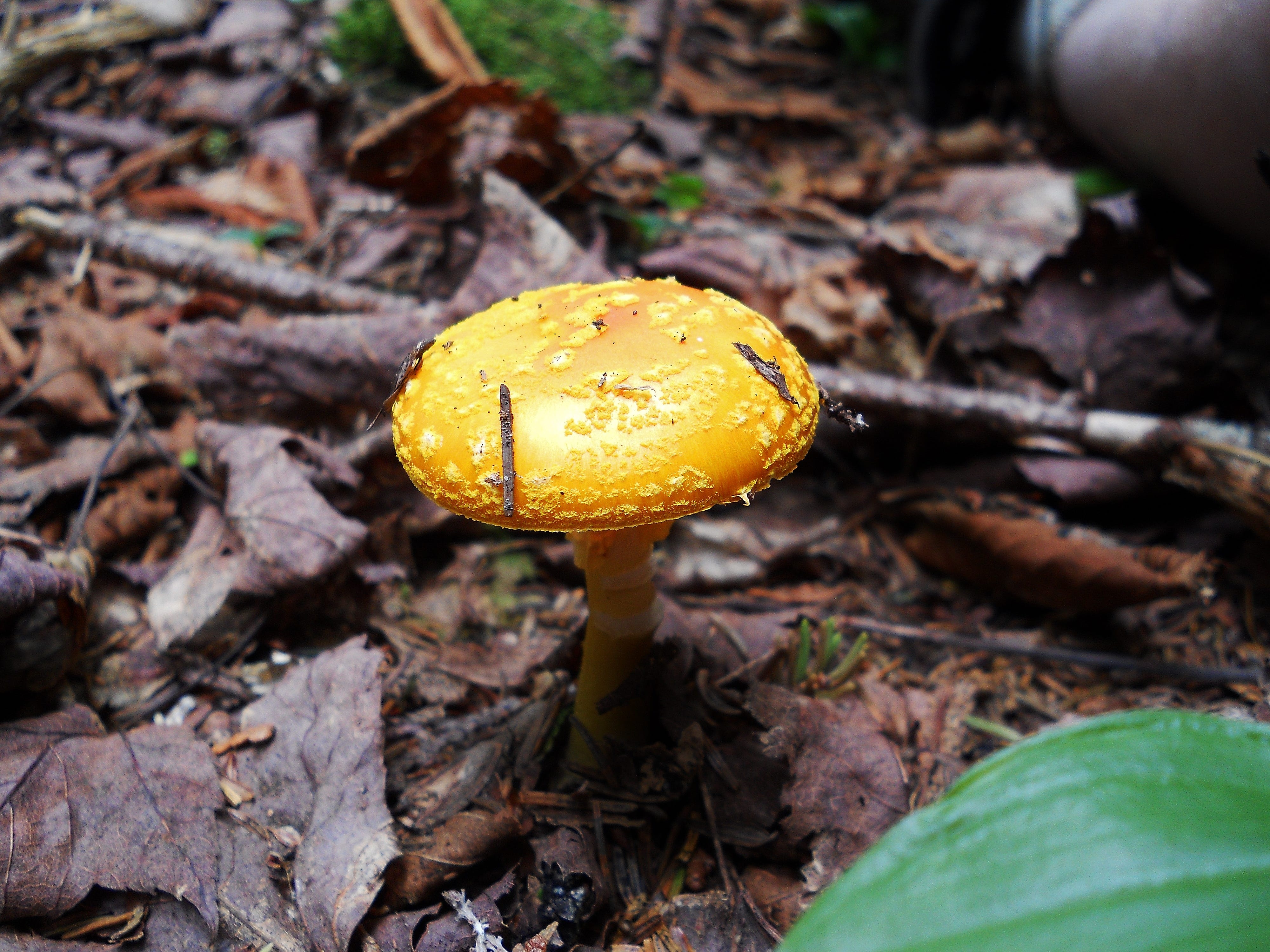
There’s another amazing aspect of soil. Have you ever wondered how mushrooms manage to pop up so quickly from the forest floor after a rain? It’s because the visible, above-ground mushroom is just the reproductive part of a much larger organism, the rest of which remains concealed in the soil beneath. A mushroom is a tip of a fungal iceberg.
Hidden in the soil, there’s a vast network of tiny fungal filaments. They interconnect the roots of trees, forming a kind of underground Internet that’s been dubbed the “Wood Wide Web.” The trees provide the fungi with food, in the form of sugar that they make in their leaves through photosynthesis. In return, the fungi provide the trees with essential minerals such as phosphorus that they draw from the soil.
The network of interconnecting filaments allows the trees to communicate. Trees that have extra nutrients can send them to other trees that are in need. And they can send warnings, in the form of chemical signals, about dangers such as attacking insects, so that other trees can prepare their defenses. When I stroll along a woodland path, the trees around me may seem silent. But I know they are talking with each other, their voices passing through the ground beneath.
I invite you to pause and think about these everyday miracles the next time you go outside. As Thoreau said in Walden, “Heaven is under our feet as well as over our heads.”
Thanks so much for this post, Wendy. Great background info for our upcoming visit to Greenville/Moosehead Lake! :)
Thank you, Wendy, for this wonderful article. I especially like the quote from Thoreau about the snowflake.
The mindfulness walk we did at the Monastery was very meaningful and I’m reminded of what you shared as I walk through our woods.
Many blessings!
Edrea